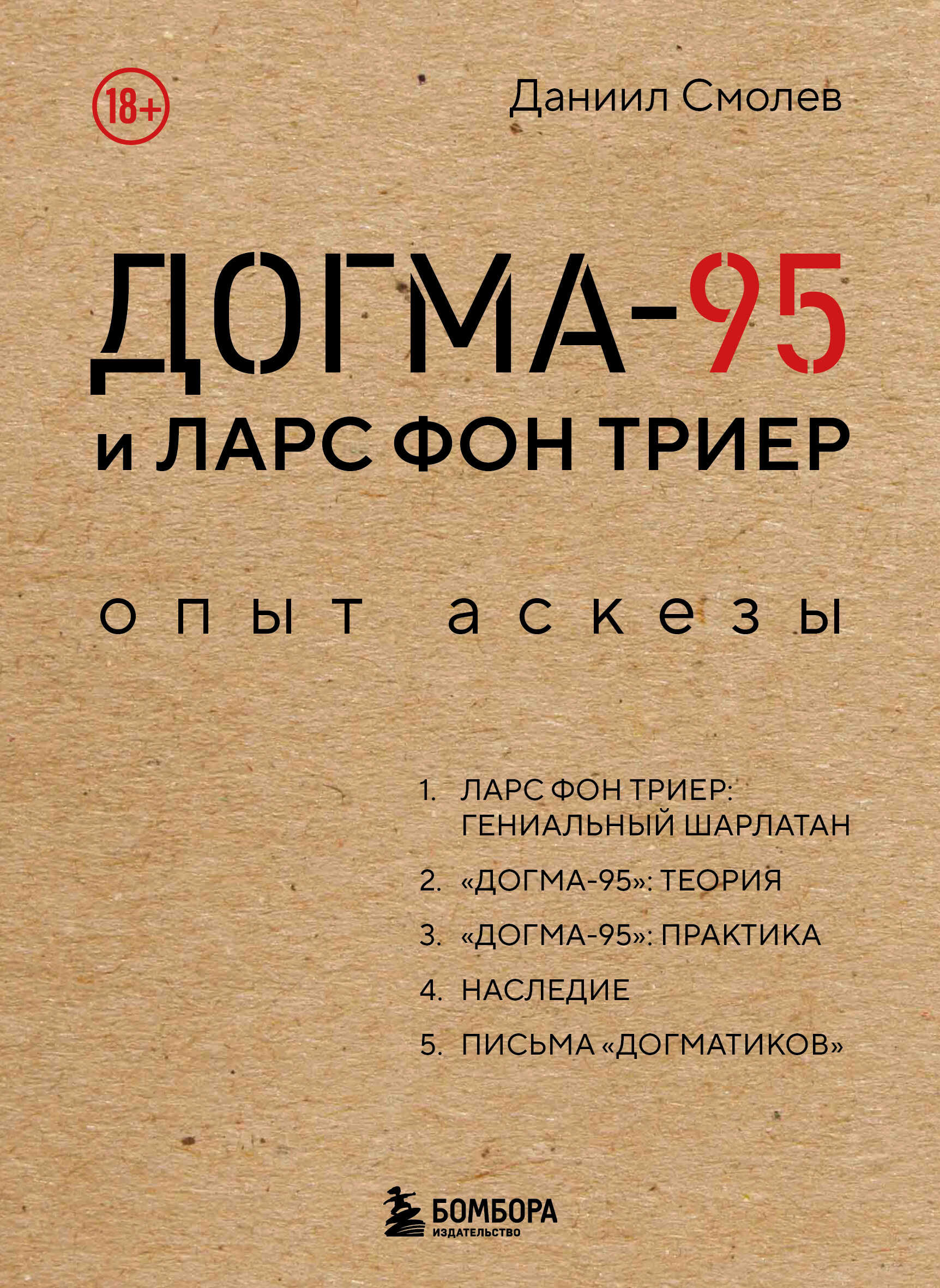
Догма-95 и Ларс фон Триер. Опыт аскезы - Даниил Дмитриевич Смолев Страница 47
- Категория: Документальные книги / Биографии и Мемуары
- Автор: Даниил Дмитриевич Смолев
- Страниц: 53
- Добавлено: 2026-05-21 18:28:48
Внимание! Книга может содержать контент только для совершеннолетних. Для несовершеннолетних просмотр данного контента СТРОГО ЗАПРЕЩЕН! Если в книге присутствует наличие пропаганды ЛГБТ и другого, запрещенного контента - просьба написать на почту pbn.book@yandex.ru для удаления материала
Догма-95 и Ларс фон Триер. Опыт аскезы - Даниил Дмитриевич Смолев краткое содержание
Прочтите описание перед тем, как прочитать онлайн книгу «Догма-95 и Ларс фон Триер. Опыт аскезы - Даниил Дмитриевич Смолев» бесплатно полную версию:Возможно, вы думаете, что «Догма-95» – это просто странный список правил из прошлого. Позвольте предложить другой взгляд. Это – самый радикальный и эффективный творческий метод новейшего времени, проверенный в бою. В этой книге вы найдете не сухую теорию, а живой опыт аскезы, который позволил группе бунтарей во главе с гениальным провокатором перезагрузить язык кино.
• В книге «"Догма-95" и Ларс фон Триер. Опыт аскезы» вы найдете не исторический очерк, а погружение в лабораторию художественной революции: как снять шедевр, если тебе запрещены музыка, грим и штатив?
• Почему отказ от контроля может стать главной силой режиссера?
• Что общего между детскими страхами Триера, философией Брехта и зернистым видео?
• Как десять «заповедей» победили голливудские миллионы на фестивалях Канн?
• Правда ли, что каждый, кто снимает на смартфон, – наследник «Догмы»?
Вы получите доступ к уникальным материалам – письмам и откровениям самих участников движения из Дании, США и Латинской Америки, которые впервые раскрывают историю изнутри. И проследите путь Ларса фон Триера – от шутника с ручной камерой до живого классика, чей «опыт аскезы» изменил представление о том, каким может быть кино.
Эта книга – для тех, кто верит, что главное в искусстве не бюджет, а смелость. А также для всех, кто хочет понять, как рождаются правила, которые стоит нарушать.
Это приглашение на красную дорожку самой дерзкой авантюры в истории кинематографа. Без прикрас, но с полным пониманием ставок.
В формате PDF A4 сохранен издательский макет книги.
Догма-95 и Ларс фон Триер. Опыт аскезы - Даниил Дмитриевич Смолев читать онлайн бесплатно
Good luck!
Best, Rich (www.richmartini.com)
Rene Verduzco Cortes
God bless and protect beautiful Russia!
The style of dogme 95 is so free and honest. Your story needs to be powerful and you have to be natural, forget tricks and the lights. I knew there was an oportunity to get the certificate when lars von trier announced in an interview of the Manderlay’s period. I thought it was easy but it was the opposite, some people didn’t take it seriously or didn’t know about dogme 95, i really enjoy the process, the result, a natural result, maybe it wasn’t realistic film, but it was a very alive film.
What do you think about Dogme’s social positions, about its influence on the life (maybe politic, young people, education etc)?
I think Lars von Trier is a total genius and Vinterberg was very enthusiastic about the idea. They both understood what they were doing and what they created, so they elevate the idea with Idioterne and Festen, both films are powerful and intense, the actors showed one of their greatest performances. Dogme 95 influenced new directors like Andrea Arnold (Red Road) and Pernille Christensen (En Soap), many american directos also took the experiment and the audience was very open, it was something new and fresh. I remember I saw Julien Donkey Boy and I was very disturbed, it was a total experience and the film wasn’t dead at all, like some purists said. New generations know that there are many ways to make a film and there’s no excuse to make a good film without millions.
And what about films after Dogme? Is this filmmaking movement topical now? What things modern art-house directors should keep in mind after Dogme?
The actual times has a little influence, but the big time in this movement is dead now. Harmony Korine, Susanne Bier, Lars von Trier and Vinterberg made the best films of the movement, now there are some films, powerful indeed, with some elements, but it’s not the same feeling as in the nineties. Some tv shows took successfully some documentary tools, but reality shows abused of the real element. It was a great thing for the end of the last century but it is done, maybe the greatest in later movements of cinema, Denmark was hidden when Dreyer died, so Dogme 95 was a way to put Denmark (and Sweden) on the map again. The good thing is that all this directors continue his filmography with new aesthethic and stories after that, and they’re still successful, I was very happy to be part of it as audience and as a director.
Chris-topher Rusch
Daniil, its good to meet you.
Here are my answers to your questions:
1. We shot the film in four days with a Panasonic DVX100 using no lights and real locations, the scenes were constructed on location with the actors. Personally, it was a rewarding experience to work with actors in a new way, the Dogma model presented useful constraints for filming and directing and these constraints created a worthwhile state-mind for all those involved. We all felt very present and mindful of what was going on, there was a sort of rhythm within the chaos, so to speak, and I selected the method specifically for this reason.
2. I’m unaware of Dogme’s social positions and influence on life. I just felt it was a good way to tell a story.
3. The takeaways from Dogme are that filmmakers need not feel limited by the ‘old’ way of making films, that is – heavy preproduction, large budgets, large crew, heavily rehearsed actors. It is very possible to make a compelling and entertaining film using limited tools and small crews on a set. What is essential is one’s ability to use their intuition and abilities as best they can in the moment. Directing, photography, and acting are at their base, simply emotional decisions that the individual makes numerous times along the way to completing a film. The Dogme95 aesthetic was an adequate means to reach these emotions decision and to see that they are accessible, and must be utilized if the creators wish to truly manage and shape the material that is being created.
Hope this is of help to you, Daniil,
Best, Christopher Rusch
Antone Anania
Hello Danill,
First can I ask where you saw my film? So many people from around the world contact me here in Hollywood about this topic. I just like to know where each saw the film.
To briefly answer your questions:
I chose this style because I was making a «THEMA-TICALLY SCARY HORROR FILM». There were no zombies or flesh eating diseases. Just people barely hanging onto threads in life and doing desperate things to each other to survive. To me that’s scary because we see it everyday. Hollywood doesn’t like to talk about «real life» because it’s not good for business but if you turn on the news any given night you’ll know what I’m talking about and you probably already do. So that was one reason. I made my horror movie, a thematically scary one. I think that thing about dogme using «traditional use of story, acting and theme» to quote it is coincidentally what I happened to be going for for my project.
Also, I had no money. I did everything myself and dogme was the easiest way to go for a one-man crew that had zero dollars. So another reason for me was NECESSITY. There’s a book by a film maker named ROBERT RODRIGUEZ, it’s called REBEL WITHOUT A CREW. Really helped a lot. Dogme before Dogme
Жалоба
Напишите нам, и мы в срочном порядке примем меры.